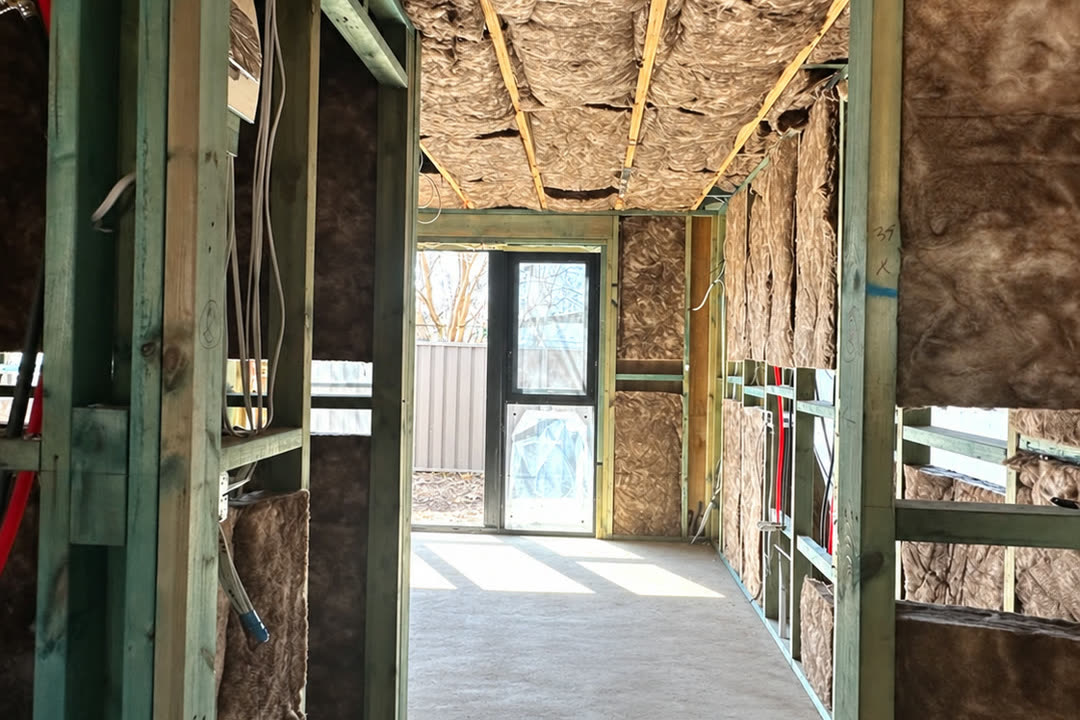
Short answer: Rough-in is the stage where the plumbing, electrical and air conditioning go into the house before the walls get closed up. The frame is standing, the roof is on and the windows are in. Inside, the walls are still open studs. Every pipe, every cable and every duct has to be run through that open frame and left in place, ready to connect later. It takes weeks, not days. On one of our current Western Sydney builds the electrician first worked on site in early August and was still coming back in mid September. The plumber started rough-ins on 1 September and was back on five more days inside the next fortnight. That is normal. Rough-in is not one visit by one trade. It is the same few trades returning in turns, each one waiting for the one before to clear the way.
What actually goes in at rough-in
Think of it as the house's nervous system. None of it will be visible when the job is done, and all of it is very hard to change once the walls are lined.
- Water pipes to every kitchen, bathroom and laundry point
- Waste and drainage lines
- Electrical cable to every light, switch, power point and appliance
- Data and TV cabling
- Air conditioning ducting, and the pipework between indoor and outdoor units
- Exhaust ducting for bathrooms and the rangehood
On the build above, the air conditioning crew came through on 10 and 13 August, in the middle of the electrician's run through the same weeks. Trades share the same cavities, so they have to be sequenced against each other rather than booked one after the other and hoped for.
Why it is not one trade at a time
This is the part that surprises owners. You look at the schedule and see rough-in as one line. On site it is a rotation.
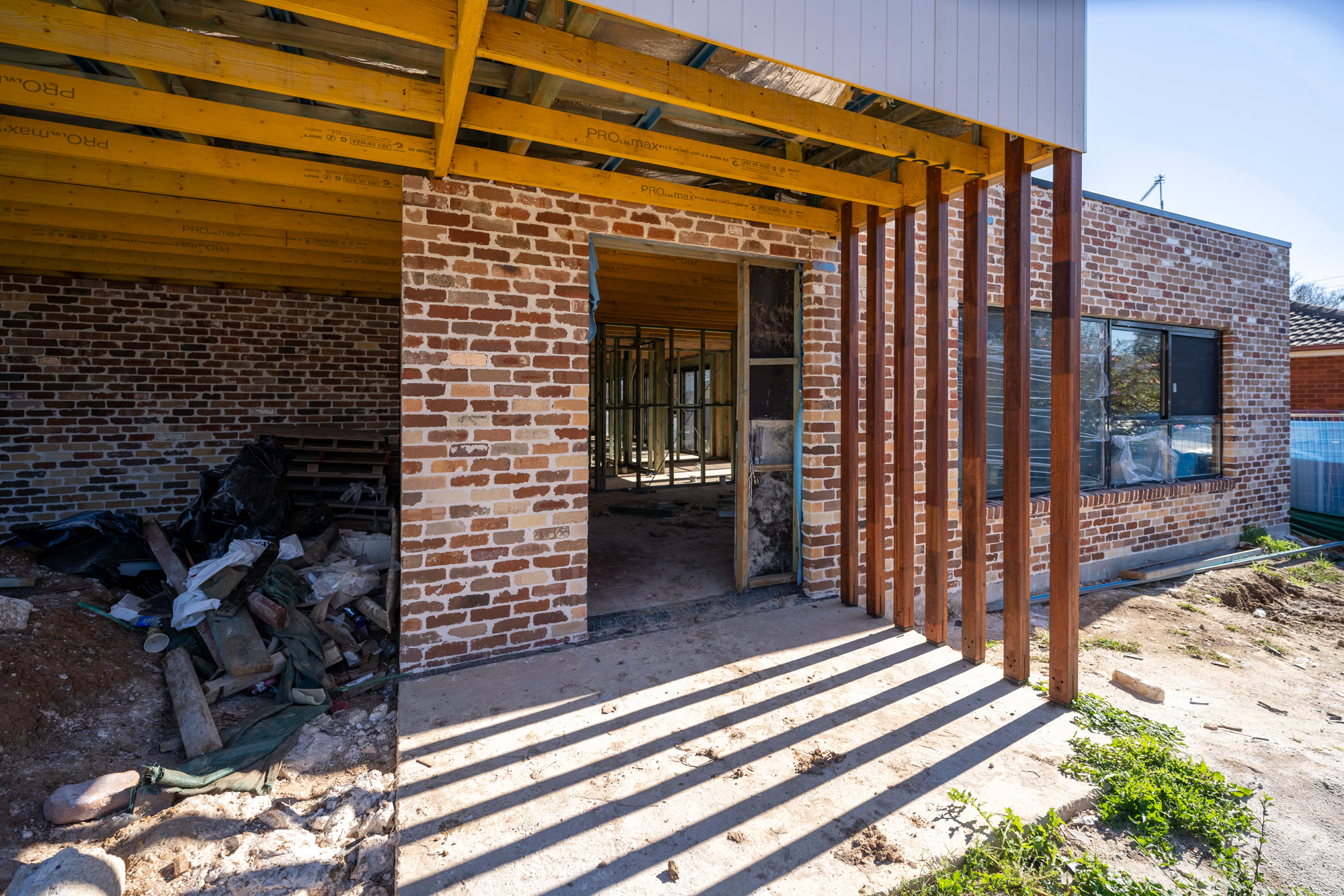
Our records from that build show the plumber on site on 1, 3, 4, 7, 8 and 9 September. The electrician was there on 4, 7 and 12 September, overlapping some of those same days. Then on 16 September the plumber, the roofer and the insulation installer were all on site together.
Each trade does a section, hits a point where it needs another trade's work finished, and leaves. The next one comes in. Then the first one comes back to do the bit that was blocked. Getting that rotation right is most of what a supervisor does at this stage.
The days when nothing happens
Open our site diary for that same build and you will find entries that say, in so many words, no action. Days in a row of them.
We write those down on purpose. A day with no trade on site is still a fact about your build, and it is the fact owners most want explained. Sometimes it is a material waiting to land. Sometimes it is a trade finishing a bad week somewhere else. Sometimes the next task genuinely cannot start until an inspection clears.
A builder who only records the good days is giving you a highlight reel. You should be able to see the quiet days too, and ask about them. We published 91 diary entries from one fit-out so you can see what those records actually look like.
Why rough-in is the last easy time to change your mind
Once the insulation goes in and the walls are lined, moving a power point stops being a five minute job. The lining comes off, the cable gets re-run, the plasterer comes back, and the painter after that.
So rough-in is the moment to walk your house and stand where your furniture will go. Where is the bed, and is there a power point either side of it. Is the kitchen bench light above where you will actually chop. Is there a point behind where the TV goes, not two metres off to the left.
If you want something moved, ask at rough-in. It is still cheap. We have written separately about what a fair variation looks like, so you know what should and should not cost you money when a change goes in.
How rough-in fits the stages around it
Rough-in sits between two stages we have already covered. The frame and roof come first, and we set out what gets inspected while your home is being built. After rough-in and insulation the house gets closed up and reaches lock-up stage.
On the build in this post the roof went on in late March and the windows went in across late March into May. The internal services then ran through August and September. That gap is not the house sitting idle. It is the order the work has to happen in.
Questions we get asked
What is rough-in stage on a build?
Rough-in is when the plumbing, electrical and air conditioning are installed inside the open frame, before the walls are lined. The pipes, cables and ducts are run through the studs and left ready to connect later. Nothing is finished off at this point, which is why it looks unimpressive and matters enormously. Once the lining goes on, none of it is easy to reach again.
Why does rough-in take weeks rather than days?
Because the trades work in a rotation rather than a queue. Each one does what it can, stops where it needs another trade's work finished, and comes back later. On one current Western Sydney build the plumber was on site seven separate days in September, with the electrician there on two of those same days. Sequencing that rotation is most of what a supervisor does at this stage.
Can I still move a power point or a tap at rough-in?
Yes, and this is the right time to ask. Nothing is covered up yet, so a change is a re-run of one cable or one pipe. After the walls are lined the same change means removing the lining, re-running the service, then patching, plastering and painting. Walk the house at rough-in and stand where your furniture will actually go.
Should I be worried if nothing happens on site for a few days?
Not by itself. Quiet days are normal at this stage, and they should be written down in your site records with a reason rather than left blank. Materials arrive late, a trade runs over somewhere else, or the next task cannot start until an inspection clears. What matters is that you can see those days and ask about them instead of guessing.
The dates in this post come from the daily site records of one live Western Sydney build. Every site runs to its own order and its own timing, so treat this as general information rather than a schedule for your own project.
Want to know what the stages will look like on your block? A feasibility session costs nothing, and our process is written down instead of promised on the day.
Book a Free Feasibility Session