Short answer: More people check your build than most owners expect, and the ones who matter most don't work for your builder. On our jobs there are three separate sets of eyes. The certifier appointed to your job signs off the stages named in your approval. The structural engineer checks the parts that hold the building up, then issues a written report. And some trades book their own inspections, the way our plumber does on drainage. On a custom home we're building in Greater Sydney, the footings were inspected on 17 June, and the slab was inspected on Friday 31 July by the engineer and the certifier on the same morning, before a single truck of concrete turned up the next day. The order never changes. Build the stage, get it checked, then cover it up.
Why the inspections land where they do
Every inspection on a build sits at the same moment: just before something disappears from view for good.
Concrete hides steel. Tiles hide waterproofing. Plasterboard hides framing and wiring. Once those go on, the only way to check the work underneath is to break it open again.
So the timing isn't bureaucratic. It's the last chance anybody gets to look.
Who is actually doing the checking
Three groups, and it's worth knowing which is which.
The certifier. This is the person who signs off the stages named in your approval and, at the end, the paperwork that says the building can be used. Your approval sets that list of stages when it's issued. It isn't our list, and it isn't optional. If you're still choosing an approval path, we've compared CDC and DA here.
The structural engineer. They check the parts that carry the load: footings, steel, slabs, retaining walls. They inspect on site and then send a written report, usually with marked-up plans.
The trades' own inspections. Plumbing and drainage is the clearest example. Our plumber books that one himself and it's his name on it, not ours.
None of them are on our payroll for the sign-off, and that's the whole point of them. A builder marking his own homework isn't an inspection.
The biggest inspection day is the one before the slab
On that Greater Sydney build, Friday 31 July was the day everything converged.
Three things had to clear before the pour. Our plumber ran his pipe penetrations through the deck. The termite trade fitted collars around those pipes. And the slab itself was inspected, by the engineer and the certifier, both on site that morning.
It was booked a week ahead. My project coordinator emailed the engineer and the certifier for their availability, got both confirmed, then went back the day before to remind them and ask them to call when they were leaving the office. The concrete went down the next day.
That's a lot of coordination for one morning. It's worth it, because from the moment the pour starts, nobody sees that steel again for the life of the building.
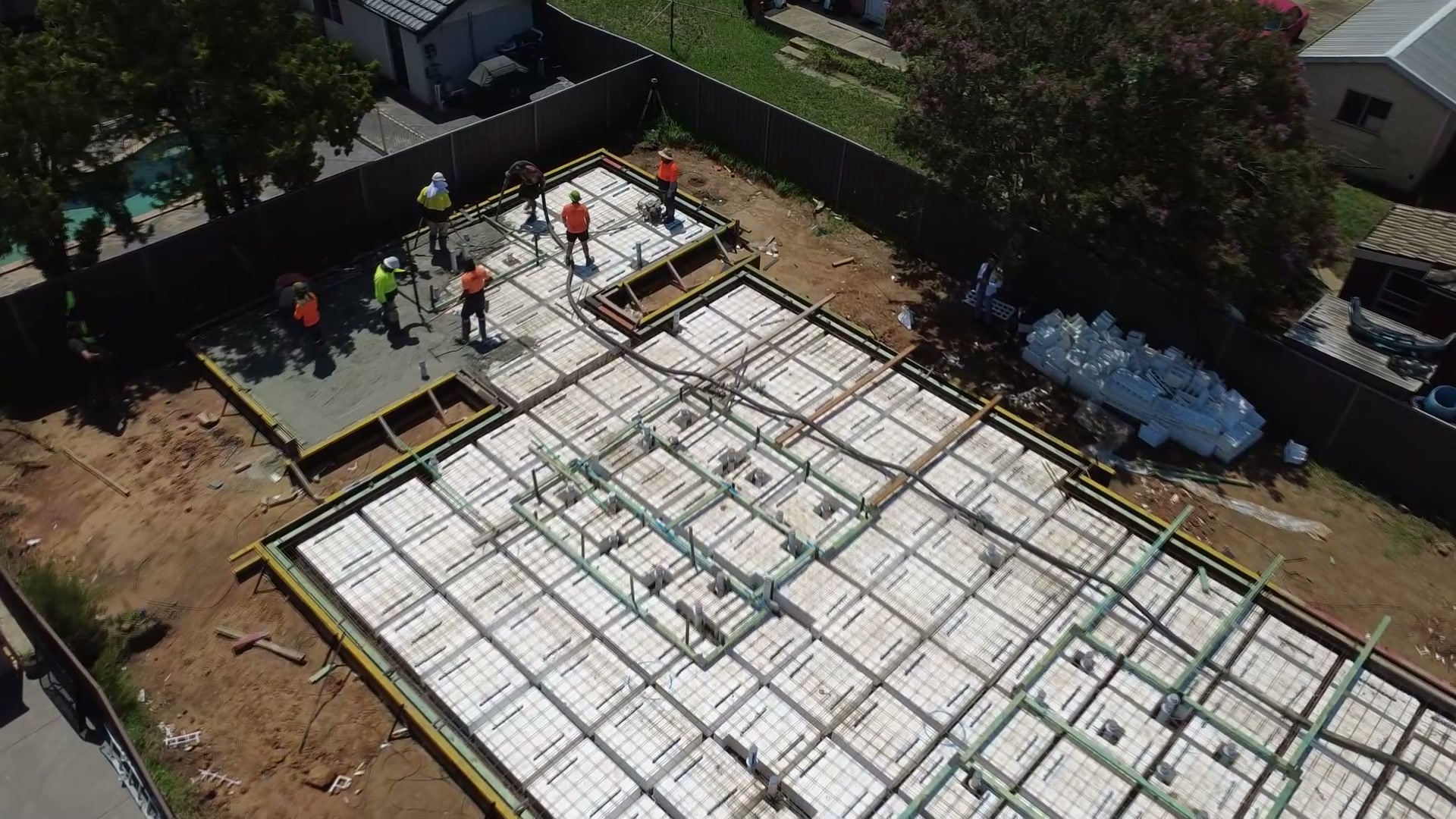
What they're looking for
An engineer at a pre-pour inspection is checking the things that stop being fixable in about an hour: the size and spacing of the steel, how it's lapped and tied, how much cover it has off the edges and the ground, and whether the set-out matches the drawings rather than the site's best guess.
Then there's the everyday stuff. Are the penetrations where the plans say. Is there rubbish sitting in the bottom of a trench. Has anything been knocked out of position by the trade that came through yesterday.
None of it is exotic. All of it is permanent thirty minutes later.
The report matters as much as the visit
The following Monday, the engineer's report came through with the marked-up plans attached. Two documents, filed against the job.
The certifier's paperwork is separate again, and certifiers usually want site photos as well as the visit before they'll issue anything.
Here's the practical bit for you as an owner: those documents are yours. Ask for them as they're produced, not at handover. A builder who can't put his hand on the engineer's report for a slab poured last month is telling you something about how the rest of the job is run.
Frame stage: check it before you call anyone
Once the frame is up and before the linings go on, the structure gets looked at again. Same logic as the slab. After the plasterboard, the frame is a memory.
We do our own check first. I'm not booking an inspection to find out whether the work is right. I'm booking it to have someone independent confirm what we've already satisfied ourselves about.
That distinction is worth putting to any builder you're interviewing. Their answer tells you whether inspections are a quality step or a hurdle to them.

The one that saves owners the most money later
Waterproofing.
On our co-living build in Western Sydney, the wet areas were inspected on 10 April and all of them passed. Only then did tiling start. That build has ten rooms with ten ensuites, so it's ten sets of membrane, corners and falls, and none of it can be tiled until the inspection clears it. The full record is in our site diary post.
Waterproof, inspect, tile. Skip the middle step and the problem shows up in year three, in a finished bathroom, and the only way to find the cause is to pull the tiles off.
The inspection nobody schedules
Some inspections you call because something looks wrong.
On that same Greater Sydney build, a brick retaining wall started leaning mid-build. We stopped work in that area and got the structural engineer on site to inspect and advise, rather than deciding on the spot ourselves. The fix was priced as a formal variation and approved in writing before work restarted. I've written up how that ran, with dates, in the scheduling post.
The habit is what matters. When something looks off, the answer is an expert with a stamp, not a site opinion.
Drainage, and the trade that books its own
On 4 August the underground plumbing on that job was signed off: the stormwater and sewer lines connected, including the new connection to the sewer main, inspected and passed the same day.
That inspection wasn't ours to book. Licensed trades carry their own obligations, and a good one chases the inspection without being asked, because his name sits on the work.
Before the bricks: the surveyor
Not strictly an inspection, but it belongs in the same list. Before bricklaying starts, we have the surveyor check the set-out against the boundaries.
An error found by a surveyor is a morning's work. The same error found after a wall is up is a different conversation entirely.
The last inspection is yours
At handover we do a detailed final inspection and walk the build with you. Anything that needs attention gets fixed before you take the keys, which is why handover takes about two weeks rather than an afternoon.
After that you have 12 months of aftercare and a 4-year workmanship warranty from us. If something comes up, we come back.
Four questions worth asking your builder
Ask every builder you're considering the same four, and compare the answers.
Which stages on my job get inspected, and who inspects each one? Will I get copies of the engineer's and certifier's reports as they're issued? What happens if something fails an inspection, and who pays for the re-inspection? And can I be on site for any of them?
There are no trick answers there. A builder who runs the process properly will find all four easy.
If you want to see how we'd run the inspections on your project, start with a feasibility check. Our full build process is set out stage by stage here.
Common questions
Who inspects a new home build in NSW?
Usually three parties. The certifier appointed to your job signs off the stages named in your approval. Your structural engineer inspects the load-bearing work, like footings and slabs, and issues a written report. And individual licensed trades, plumbing especially, book their own inspections on their own work.
What happens if an inspection fails?
The work gets corrected and re-inspected before anything is covered over. It costs time on the program, and sometimes money, but that is the system doing exactly what it exists to do. What should never happen is the next stage going ahead on a promise that it will be sorted later.
Do I get copies of the inspection reports on my build?
You should, and you should ask for them as they come in rather than waiting until handover. On our jobs the engineer's reports and markups are filed against the project as they arrive, along with dated site photos of each stage before it was covered.
Can I attend inspections on my own build?
Ask your builder early. On our jobs owners are welcome on site by arrangement, and the pre-pour stage is the one most worth seeing, because it is the last look anyone gets at the steel. You get live camera access and daily site diaries either way.
Want to know which inspections your build will need? A feasibility session costs nothing and walks you through the stages on your site before you commit to anything.
Book a Free Feasibility Session