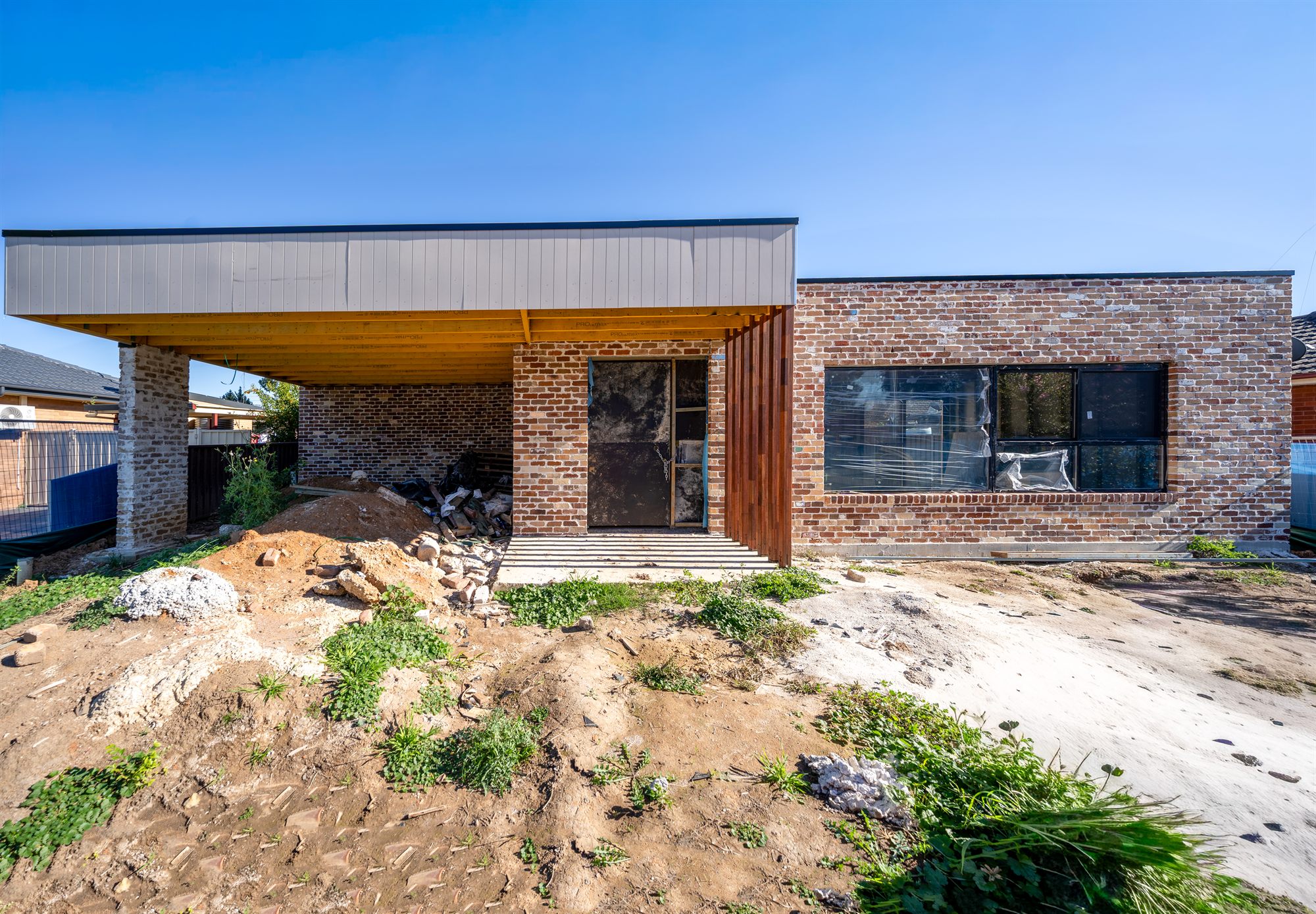
Short answer: Lock-up is the point where your build can actually be locked. The roof is on, the external walls are up, and the windows and external doors are in. From there the trades work inside, out of the weather. It sounds like a single day on a schedule. On site it is a stage that runs for weeks, because most of what it depends on is made off site and fitted by specialists who are not on your job full time. On one of our co-living builds in Western Sydney, the fascia and gutters went on 24 March. Roof sheeting started on 27 March. The windows began going in on 30 March, and the glazing, locks and handles were finished on 24 April. That is about four weeks, on a build that was running well.
What lock-up actually means
Four things have to be true. The roof is on, the external walls are up, the windows are in, and the external doors are hung and lock.
Once that is done, weather stops running your program. Plasterers, electricians and tilers can work to a plan instead of to the forecast. Materials can sit on site overnight without being covered or carted away.
That is why the stage has a name at all. It is the day the building turns from a structure into a shell you can close.
It is also one of the stages most building contracts bill against. The wording varies between contracts, so read what yours counts as lock-up before you sign it. We compared the two main contract types in cost-plus vs fixed price.
What it looked like on our Western Sydney build
This one is a co-living build in Western Sydney. Here is the run, straight off the site diaries.
- 24 March. Fascia and gutters installed.
- 25 March. We counted the laid bricks, one by one.
- 27 March. Roof sheeting started. Logged at 20 per cent.
- 30 March. The window installer started.
- 31 March. Roof at 80 per cent, windows at 50 per cent.
- 1 April. Windows at 60 per cent, internal doors delivered from the warehouse.
- 8 April. The installer was off site. The note reads: he will come back in two weeks.
- 24 April. Glazing in, with the locks and handles.
- 12 May. The installer back on site, fixing and adjusting the sliding doors.
Read that list again and you can see where the time went. The roof took days. The windows took six weeks from the first one going in to the last adjustment.
The trade you wait for is the one making something
Roof sheeting arrives on a truck and goes on. Windows are made to your openings, in a factory, to a measurement someone took months earlier.
So the windows set the pace, not the roof. When an installer says he will be back in two weeks, that is usually honest rather than evasive. He is working across several sites at once, and yours is one of them.
Delays like that are normal on any build. What matters is whether anyone writes them down. We logged the two-week answer against the job on 8 April, so on 22 April there was a date to hold him to instead of a memory of a phone call.
The defect that went on the list before anyone asked
In late March the front window was found to be out of alignment.
It went on the list with two dates against it: 27 March, when it was noticed, and 2 April, when it would be fixed. The gap was there because the person who had to do the work was committed to another site until the Thursday.
Nothing dramatic about any of that. Every build has defects. The difference is whether they sit on a list with a date next to them, or in somebody's head.
We counted the bricks one by one
On 25 March the bricklayer's measurement came in, and we counted the laid bricks by hand against it.
It takes a morning. We are not expecting to catch anyone out. We do it because a quantity nobody checked is a number everyone else has to take on trust.
If you are paying for work by measurement, the question to put to any builder is short. Who checks the count, and what happens if it does not match.
What lock-up does not mean
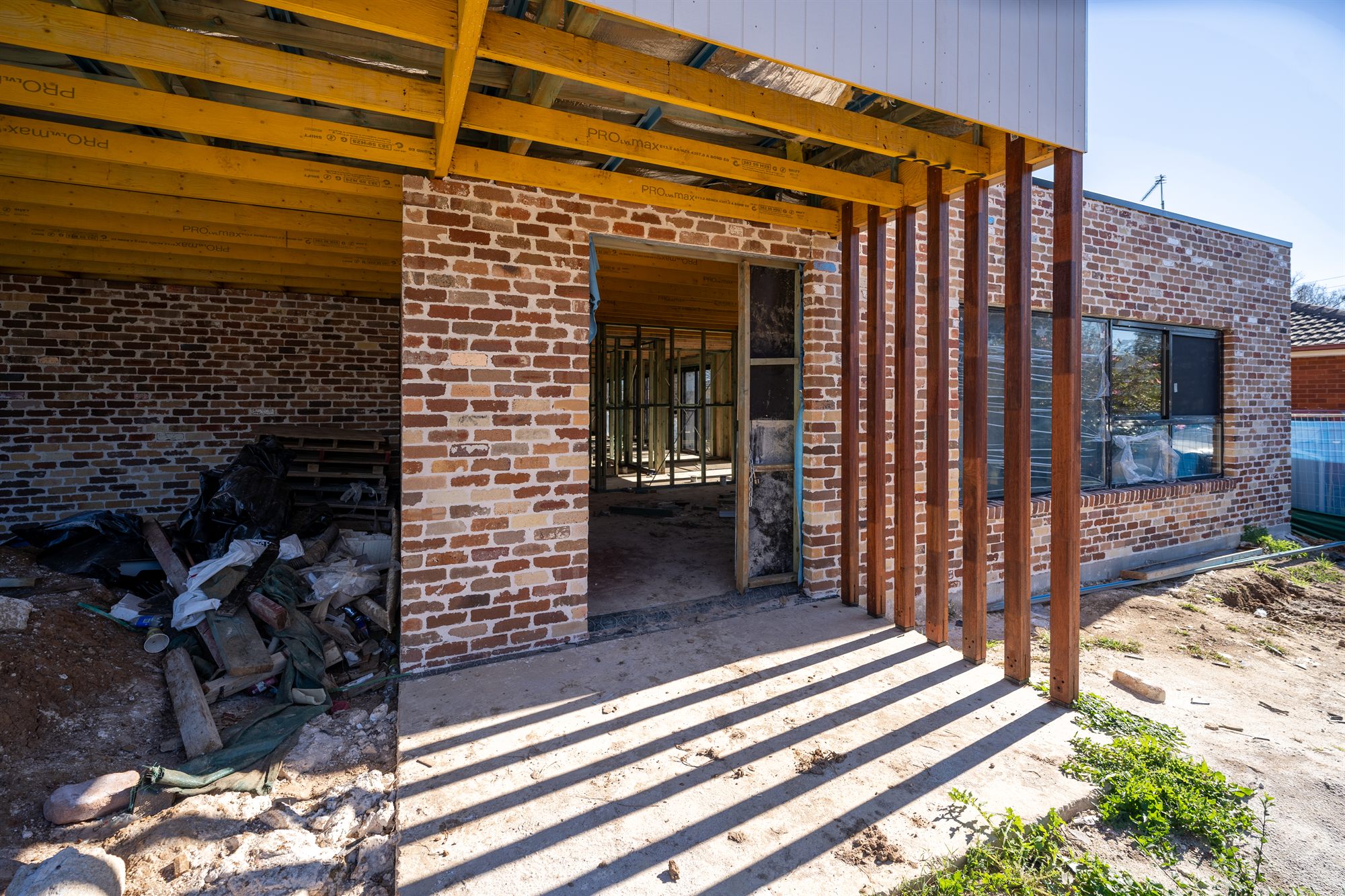
It does not mean nearly finished. This is where owners get caught out, because from the street a locked-up house looks close to done.
Behind those windows the linings, waterproofing, tiling, joinery and the electrical and plumbing fit-out are all still to come. On that same build the electrician was working through July and into August. The joiner met us on site on 7 August, three and a half months after the glazing went in.
Lock-up is a milestone, not a finish line. What it buys you is certainty, because from that point the weather has much less say in your dates. We set out how the stages fit together in from slab to handover.
What to look at when you walk a build at lock-up
Go and see it. It is one of the better site visits, because the frame and the roof structure are still open to view and nothing has been covered up yet.
Open every window and slide every door. Check the locks and handles are fitted and working, not sitting in a box on the floor. Look at the sills and the head of each opening for gaps. Follow the gutters and downpipes and see where the water is meant to go.
Then ask for the site diary. On our jobs every day is logged with the trade, the percentage complete and photos, and owners get live camera access as well. If a builder cannot show you what happened on a given Tuesday in March, that tells you something. We published a full fit-out diary here so you can see what that record looks like.
If you're weighing up a co-living project, our co-living build page covers what we do and how. Our full build process is set out stage by stage here.
Common questions
What does lock-up stage mean on a building contract?
It means the building can be closed and locked: roof on, external walls up, windows and external doors installed. The exact wording differs between contracts, so check the definition in yours rather than assuming. Some list the external doors again as a separate item.
How long does lock-up take on a build?
On our Western Sydney co-living build it ran about four weeks from the first roof sheeting to the glazing being finished, then a few more weeks of adjustments after that. The roof is the quick part. The windows drive the timeline, because they are made to measure and fitted by a specialist who is working across several sites.
Is the house weatherproof at lock-up?
That is the point of it. Once the roof, windows and external doors are in, rain stops setting your program and the internal trades can work to a schedule. There is usually still sealing and flashing work to finish off around the openings.
Can I visit the site at lock-up stage?
Ask your builder to arrange it. It is worth seeing, because the frame and the wall cavities are still visible and will be behind plasterboard shortly after. On our jobs owners also get daily site diaries and live camera access. We covered what gets checked at each stage in the inspections post.
Want to know what the stages would look like on your block? A feasibility session costs nothing and walks you through the program before you commit to anything.
Book a Free Feasibility Session