Short answer: Once you sign, there is a set order before any machine turns up. First, the home building insurance certificate for your job comes through. Then you pay the deposit. If your approval is not in place yet, we apply for it. Then we meet on site for a pre-start meeting, and the fencing and site toilet go in.
How long that takes depends on where you start. If your design is done and your CDC is already approved, the main wait is the bank. Normally that is four to six weeks from signing to the first day on site. Right now it is closer to six weeks, because banks are taking longer to approve loans.
If you still need a CDC or a DA, that time comes on top. On a knockdown, the old house has to be disconnected and demolished first. Without gas, that is three to four weeks. With gas, it can be ten weeks or more.
The order things happen in
Here it is, step by step.
- The insurance certificate for your job comes through. Home building compensation cover has to be in place before you pay anything. We explain why the order matters in what happens if your builder goes broke.
- You pay the deposit. The deposit has a legal cap, and we cover it in what to ask a builder before you sign.
- The approval. If your plans are not approved yet, this is when we apply.
- The pre-start meeting. We meet you on site and walk through the job before it starts.
- The site gets set up. Fencing goes up and the site toilet goes in. After that, the work begins.
If a builder asks for money before you have seen the insurance certificate, the order is wrong. That is worth stopping for.
How long it takes
It depends on where you are when you sign.
If your design is done and your CDC is already approved, everything is ready to go except one thing: the bank. Normally that takes four to six weeks from signing to the first day on site.
Right now, it is closer to six weeks. Banks are taking longer to approve loans in the current market. That has nothing to do with your build, and there is nothing on site we can do to speed it up.
If you still need an approval, that time comes on top. A CDC is usually the quicker path and a DA goes through council. We explain the difference in CDC vs DA.
What we need from you before we can start
Two things are must-haves:
- The deposit, paid.
- A bank approval letter. We need to know the money is there before we commit trades to your job.
One thing is ideal but can wait:
- Your finishes. It helps if they are all picked before we start, but you can choose as the build goes along. Some clients like to have everything settled first and some do not. We cover the real deadlines in when to choose your finishes.
And the plans have to be ready to build from. That means stamped plans with all the documents behind them, like the geotech report and the survey. You can bring that package to us complete, or we can put it together for you. Either way, it has to be there before we break ground.
What holds it up
Three things cause most of the delays between signing and the first day on site.
The bank. Valuations and approval letters are taking weeks longer than they used to. It is the most common wait we see.
Changing the plans after you sign. If you change the design once it is approved, it can go back for approval again. A small change on paper can mean weeks on the calendar.
Disconnecting the old house. On a knockdown, nothing can be demolished until the services are off. Gas is the slow one. More on that below.
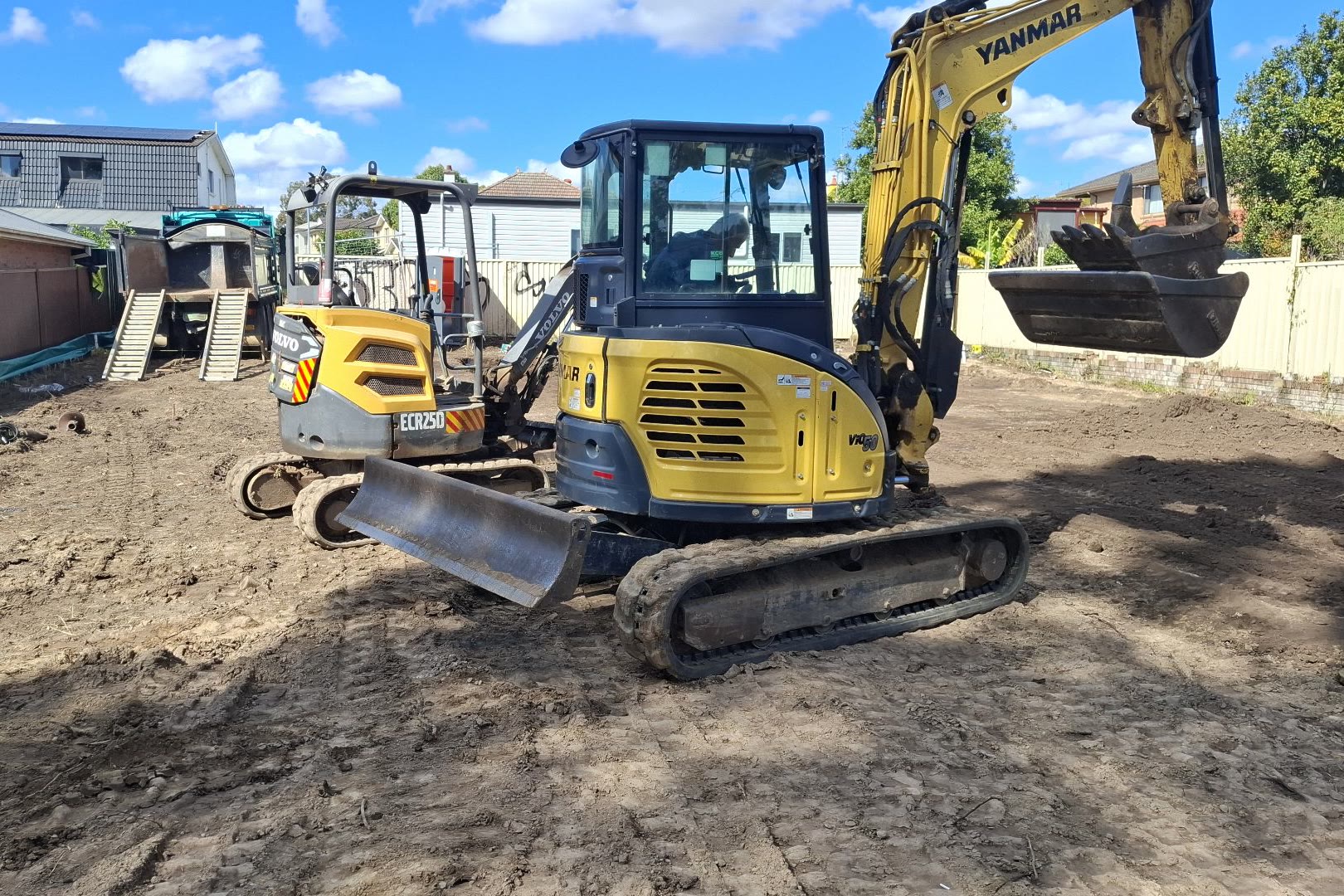
On a knockdown, the old house comes first
If you are building on vacant land, it is quicker. There is nothing to knock down, so we go straight to site preparation.
If there is an old house on the block, it has to be disconnected and demolished first. We help with all of it.
- Electricity can usually be disconnected within a week.
- Water we can sort out in that same week.
- No gas? Then the whole demolition stage takes up to three weeks, four at the most, before the site is ready.
- Gas is the slow one. The gas disconnection alone can take six to ten weeks, and that timing sits with the gas provider, not us.
That is why we tell people to talk to us early. If we know about the gas before you sign, we can get the disconnection moving while the bank is still doing its part. Weeks of waiting on gas do not have to happen after the bank says yes.
What we have found under old houses
Demolition is where the surprises come out. Two from our own jobs.
Asbestos where nobody could see it. On one knockdown, there was asbestos under the house, in a part you could not see until the house came down. There was a lot of it, and it all had to be removed carefully.
It did not delay the job. It did mean a variation, and a conversation with the client about why the price had changed. That is what a variation is for, and we explain how a fair one works in what a fair variation looks like.
A whole swimming pool, buried. Another block had been lived on since the early 1900s. When we dug the site after demolition, we found that someone had buried an entire swimming pool. All of it had to be stripped out. That meant extra work and about another week on the program.
Our contract says this plainly: once we dig, we can find anything in the ground. Nobody can see under a house or under a lawn before the work starts. What we can do is tell you up front that it is possible, and write it down when it happens.
Once you are on site
From the first day on site, the build moves into stages: site preparation, slab, frame and on to handover. We explain how we keep that part on schedule in from slab to handover.
Questions we get asked
How long does it take from signing a building contract to starting on site?
If your design is done and your CDC is approved, it is normally four to six weeks, and closer to six right now because banks are slower to approve loans. If you still need a CDC or DA, that time comes on top. A knockdown adds three to four weeks without gas, and ten weeks or more with gas.
What do I need before my builder can start?
On our jobs, the deposit paid and a bank approval letter, plus stamped plans with the geotech report, survey and other documents behind them. Finishes help if they are picked early, but you can choose them as the build goes.
Why does gas take so long to disconnect?
The gas disconnection on an old house can take six to ten weeks, and demolition cannot start until it is done. That is why it is worth raising early. We can get it moving while the bank is still working on your loan.
What happens if you find something in the ground?
It gets dealt with and written down. We have found hidden asbestos under a house and a buried swimming pool on an old block. The asbestos was a variation with no delay. The pool was extra work and about a week. Our contract says up front that once we dig, we can find anything.
This describes how the lead-up works on our own jobs. Timings depend on your bank, your approval and your block, so treat them as a guide, not a promise. This is general information, not legal advice.
Thinking about a knockdown or a new build? Talk to us before you sign. Book a free feasibility session and we will tell you what needs to start early on your block.
Book a Free Feasibility Session