Short answer: On a well-designed co-living build, a problem in one room should stay in that room. Each room is set up to work like a small home of its own, so a fault in one does not take the rest of the house down with it. Where the design and the budget allow, that means running each room on its own electrical circuit, keeping the plumbing separated room by room, and giving each room its own air conditioning rather than one system for the whole building. It costs more to build that way. We still aim for it because on a property with ten rooms in it, nine other people need a working shower while the tenth room gets sorted out. It is good practice rather than an automatic inclusion, and what is possible depends on the layout and the budget.
What people are actually worried about
When someone is looking at a co-living build for the first time, this is usually the worry underneath everything else. Not whether something will go wrong, because in any building something eventually does.
The worry is what one problem does to the rest of the house. In a family home, a burst pipe is one household's bad week. In a building with ten separate rooms in it, the same burst pipe can affect ten people who have nothing to do with each other.
That is a fair thing to be worried about, and it is a design question rather than a maintenance one. It gets answered years before anything goes wrong.
Each room is built to run on its own
The way I think about it, every room is close to a studio on its own. The point is to isolate it, so a problem in one room stays that room's problem.
Where the design and budget allow, that means three things. The electrical for each room runs on its own circuit. The plumbing is separated room by room. And the air conditioning is per room, which on a ten-bedroom build usually works out at eleven or twelve individual units rather than one system serving everything.
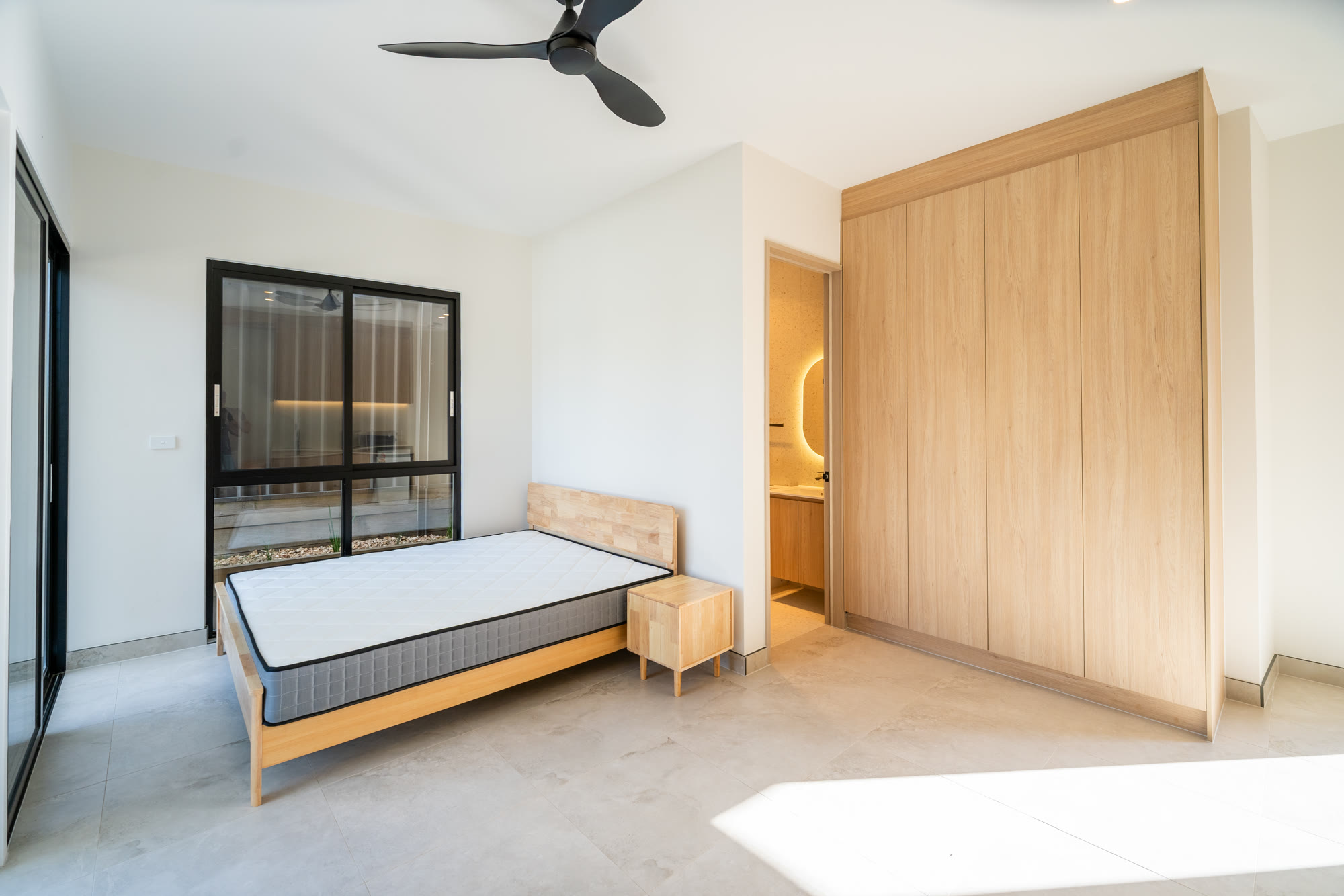
It is very different from a normal house. In a house, everything is shared by one household, so there is no reason to split it. Here there is.
You can see how that plays out in the finish on our completed co-living build in Western Sydney.
What that means when something does go wrong
Take a tap that will not stop running. If the plumbing to that room can be isolated, the water to that one room goes off and the plumber works on it. Everybody else in the building carries on as normal.
Same with the electrical. A fault in one room that trips its own circuit is an inconvenience for that room. A fault that trips the whole house is an inconvenience for everyone, and it is a phone call at a much worse hour.
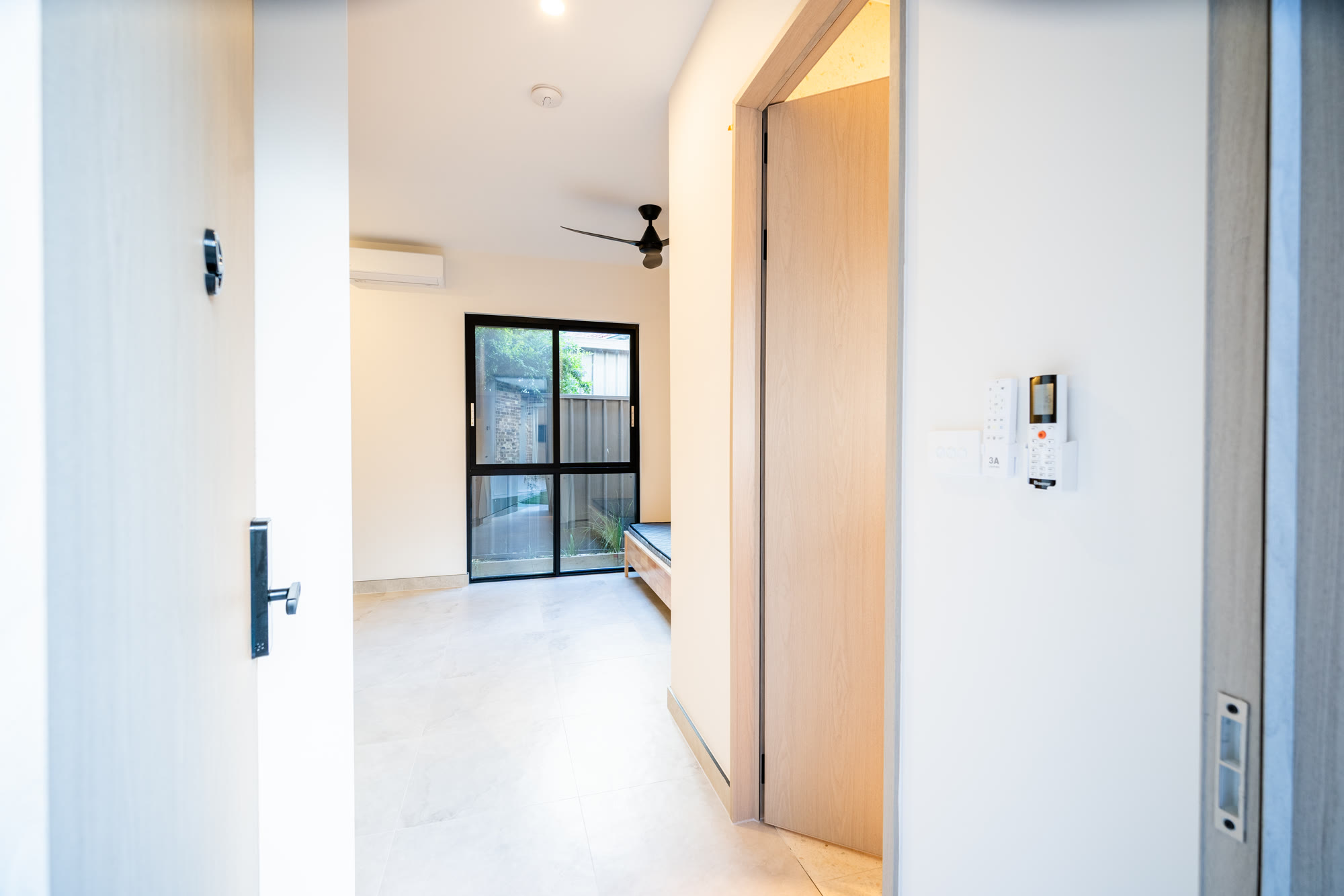
And air conditioning is the easiest one to picture. One unit failing in July is one room without heating. One central system failing in July is the whole building.
None of this stops things going wrong. It changes how far the problem travels, which in a shared building is most of what matters.
What actually comes up
I want to be straight about this, because builders tend to talk as though nothing ever goes wrong on their jobs.
Things do come up, usually around the six-month mark, and they are almost always small. Something that got overlooked. A lock that has stopped working, or batteries in the locks that need replacing. Sometimes a tenant has done something to it.
It is basically repairs and fixes. That is the honest description of the first year on one of these builds, and it is a very different list from the one people imagine when they are deciding whether to go ahead.
The running side of a co-living property, including the upkeep you should plan for, is covered in what it really costs to run a co-living property.
Why it is not automatic
I would rather say this plainly than let it read as a guarantee. Separating everything room by room is good practice, and it is how we like to build these. It is not a fixed inclusion on every job.
It depends on the design and it depends on the budget. Some layouts make it straightforward and some make it expensive. On a tight budget it is one of the things that gets weighed against everything else the build needs.
So it is a conversation to have before anything gets priced, not an assumption to make afterwards. It is the kind of thing we work through at feasibility, when the design is still a sketch and changing it costs nothing.
Common questions
If one room floods, does the whole house have to shut off the water?
Not if the plumbing to that room can be isolated, which is what we aim for on these builds. The water to the affected room goes off and the rest of the house carries on. How far that separation goes depends on the design and the budget, so it is worth asking about specifically rather than assuming it.
Does every room really need its own air conditioner?
On a co-living build it is usually the better approach, because people in separate rooms want different things and one system cannot serve them all well. On a ten-bedroom build that generally means eleven or twelve units. It costs more up front than a single system, and it means one failure affects one room instead of the whole building.
What normally goes wrong in the first year?
Small things, mostly around the six-month mark. Something overlooked during the build, a lock that stops working, batteries in the locks, or damage from someone living there. Repairs and fixes rather than anything structural.
Is the room separation guaranteed on every build?
No, and I would not want it read that way. It is good practice and it is how we prefer to build, but what is achievable depends on the layout and on what the budget carries. It should be settled at design stage, in writing, before anyone prices the job.
Thinking about a co-living build? A feasibility session costs nothing and works through what your block and your budget can actually support. There is more on how we work as a co-living builder in Sydney.
Book a Free Feasibility Session