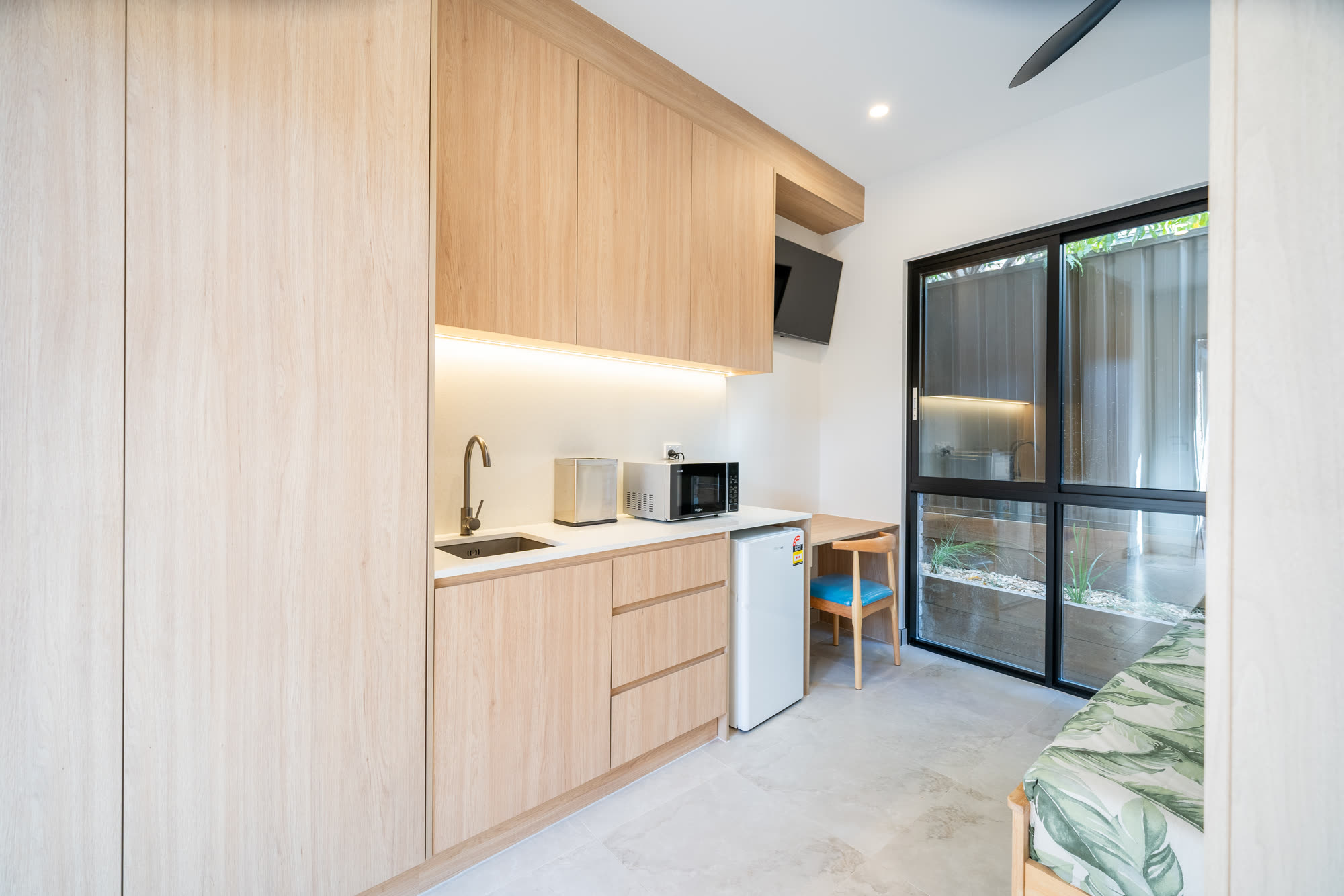
Short answer: You keep co-living tenants long term by building a home people do not want to leave. A co-living property behaves like a commercial property, not like a house, and its income comes from the people living in it, room by room. So on our builds the finish is a retention tool. Every bedroom gets its own bathroom, which means every tenant keeps their privacy. In higher-rent areas, renters are often willing to pay more, and the fit-out moves toward the level of a hotel: high-end furnishings, proper common areas, a place that feels finished. The aim is simple. When a tenant compares their room with what else is on the market, staying should be the easy choice. Nothing about tenancy can be guaranteed, and any rent talk here is general market information only. But the builder's share of the retention job is decided long before the first tenant moves in.
The target is renters who stay
A house gets built, then sold or rented, and the builder moves on. A co-living property is different. It behaves like a commercial property, not like a house.
Every time a tenant leaves, the owner wears the changeover. The room earns nothing while it is cleaned, advertised and shown. Those costs exist on any rental, and a co-living property has more rooms that can turn over. We went through the running numbers in what it really costs to run a co-living property.
So filling a room fast is the small win. The bigger one is a tenant who settles in and stays for years. That is the target I set for every co-living home we build.
The finish is a retention tool
Retention starts at the design stage, before a tenant has even seen the place. That is the part most owners miss.
The spend on a co-living build is set by what the location can earn, not only by the build inputs. If the home sits in an area where rents are higher, renters there are often willing to pay more. That pulls the project toward the top end of the market. At that level you put in high-end furnishings and make the place feel like a hotel, because you want people to want to stay.
That is general market observation, not a promise about any property. But it is how I think about finish level on every co-living build we price.
What that looks like inside the build
Privacy comes first. On our co-living builds, every bedroom gets its own bathroom. We have built 10 bedrooms and 10 bathrooms in several locations across Western Sydney. Nobody queues for a shower, and nobody argues about who left the mess.
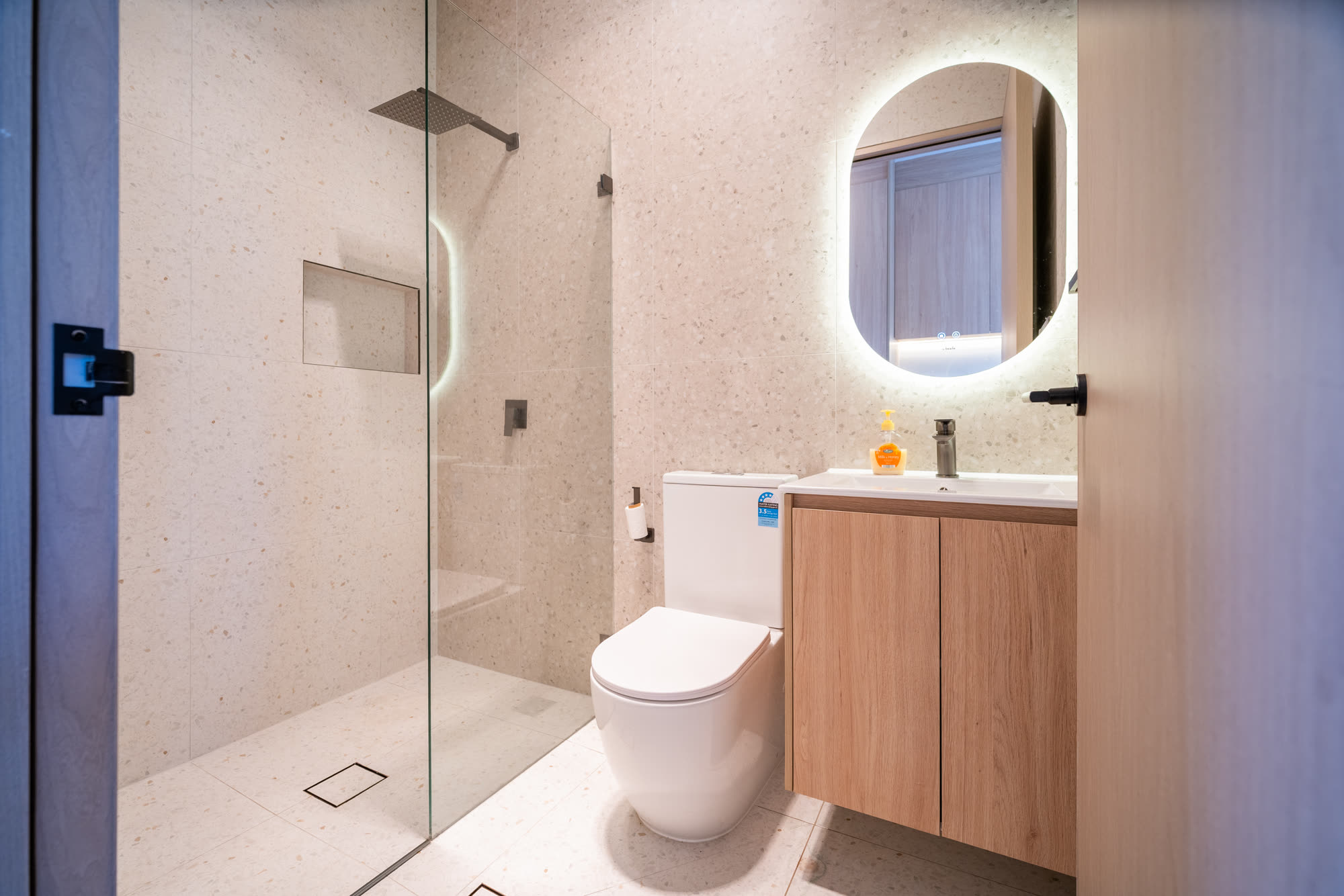
Each room is set up to run as its own small home. Heating and cooling go in room by room, so tenants set their own comfort instead of sharing one thermostat.
Then the shared spaces. A kitchen sized for several people cooking at once, and common areas finished to a standard most renters could not put together on their own. When the whole place feels considered, people look after it, and they have fewer reasons to look elsewhere.
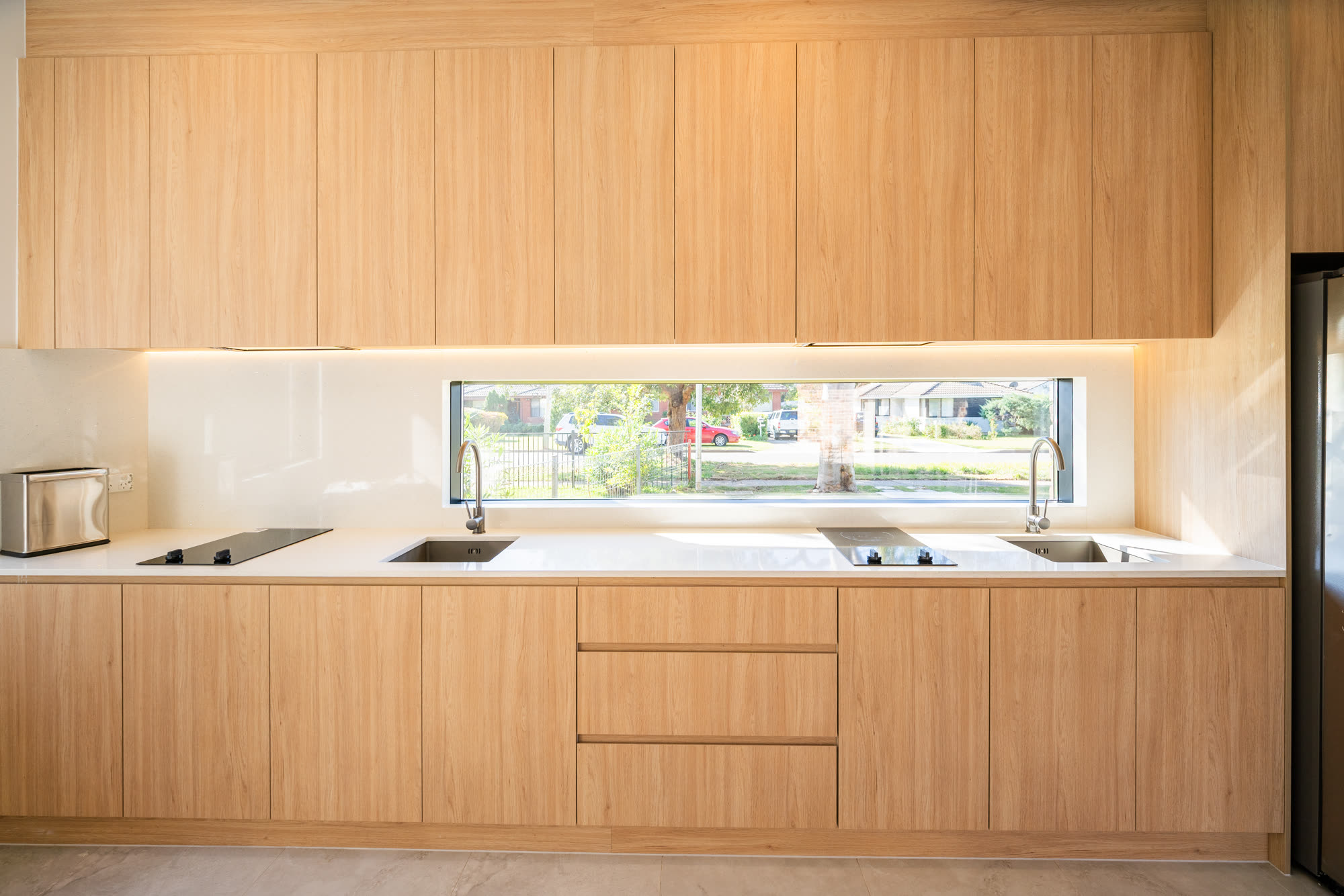
You can see the finish level on our completed co-living build in Western Sydney.
Match the finish to the area, not to a formula
Not every build should chase the top end. In an area where rents sit lower, the market is unlikely to pay for hotel-level fit-out, and the finish should be set with that in mind. The area sets the level. The build should follow it.
This is exactly what we work through at feasibility, before anyone commits to a design. What the location can support, what the build should include, and where the finish should sit. It is the same thinking we bring to every job as a co-living builder in Sydney.
Auzzy Projects is a builder, not a financial adviser. Any mention of cash flow, gearing or returns is general information only — not financial advice. Please speak to a licensed adviser or our specialist partners about your situation.
Common questions
What makes tenants stay in a co-living home?
Comfort and privacy, mostly. A bedroom with its own bathroom, control over your own space, and shared areas that feel finished rather than left over. A tenant who compares their room with the rest of the market and finds nothing better has little reason to move. Day-to-day management matters too, and that part sits with the owner or their manager, not the builder.
Why give every bedroom its own bathroom?
Because shared bathrooms are where share-house friction starts. A room with its own bathroom works like a small home of its own, and that is what people stay for. It is why we have built 10 bedrooms and 10 bathrooms in several of our co-living projects.
Should every co-living build have a luxury finish?
No. The area sets the level. In higher-rent areas, renters are often willing to pay more, which can support a hotel-standard fit-out. In other areas it will not, and the finish should match what the local market supports. That is a feasibility question, and it is general market information rather than advice on any specific property.
Do long-term tenants change the returns?
Every changeover has a cost: cleaning, reletting, and a room earning nothing in between. Fewer changeovers mean fewer of those costs. Nobody can promise occupancy or rent, though, on any property. The full running-cost picture is in our post on what a co-living property costs to run, and a licensed adviser can put numbers against your own situation.
Thinking about a co-living build? A feasibility session costs nothing and looks at what your block and your area can support before you commit to anything.
Book a Free Feasibility Session